Which Klaviyo flows a Shopify store under 50,000 sessions should switch on, and in what order: welcome, abandoned checkout, repeat purchase, plus PECR consent rules.

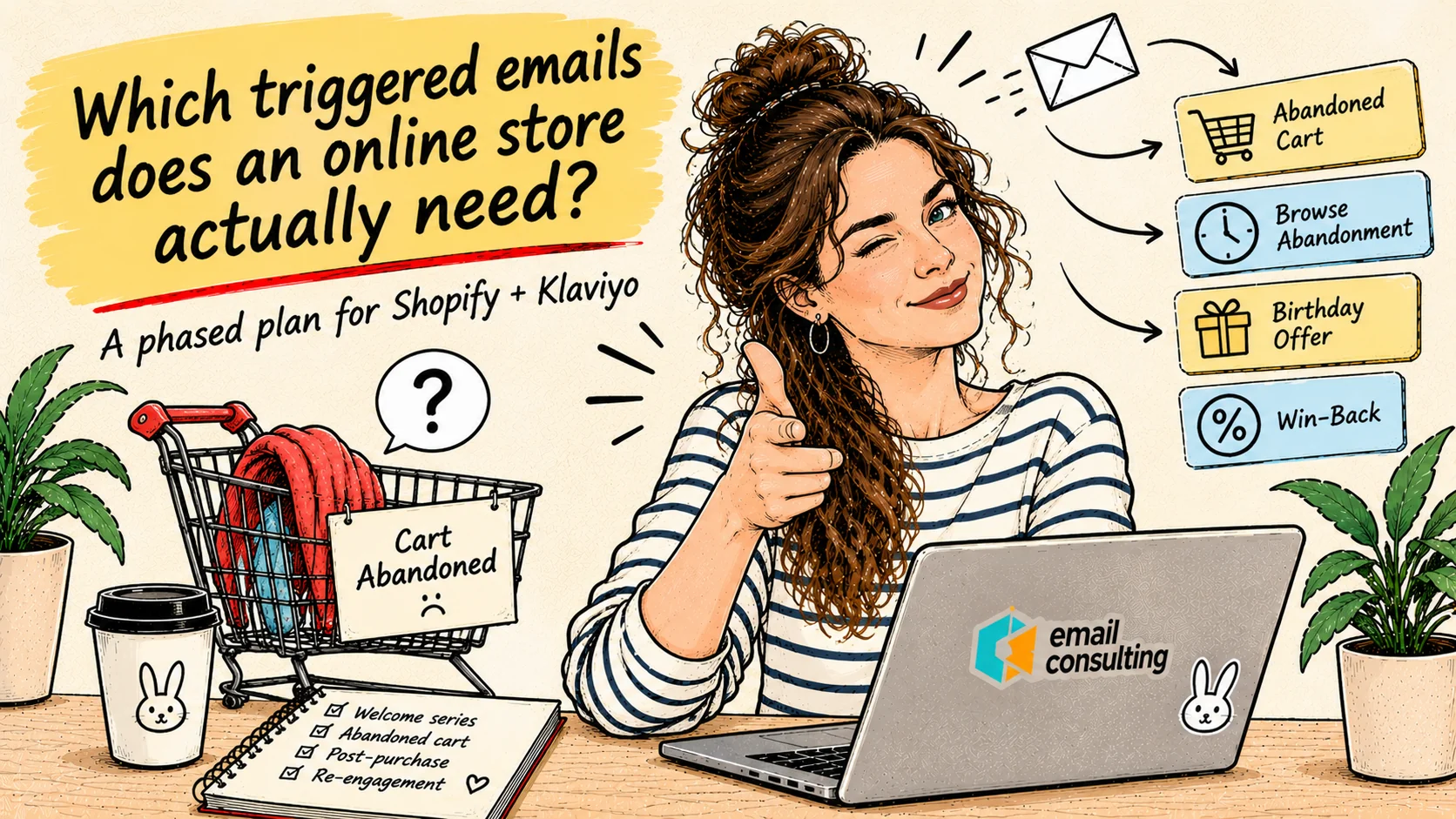
Who this is for. Online stores on Shopify and Klaviyo with up to 50,000 sessions a month. If a conference talk left you feeling everyone else is flying a spaceship with 40 automated flows while you have three, don't worry. You don't need the spaceship. At your traffic it won't take off; it will just send six emails a week to the same 3,000 people. What you need is a handful of flows switched on in the right order.
Short answer. Start with a sign-up form, a welcome series and abandoned checkout. Add the rest in stages, once each earlier flow has enough volume to show what it brings in. If you have more than 150,000 sessions a month and dozens of categories, you'll need more flows, and that is covered at the end.
In many markets, triggered emails are a technical project: events on the site, customer identifiers, product feeds, a developer who is "two sprints away". On Shopify with Klaviyo, most of that comes in the box. The integration passes viewed products, carts, started checkouts and orders, and Klaviyo has ready-made templates for every common flow. You can switch on a dozen of them in an afternoon.
That is exactly the trap. A store switches everything on in week one, and a month later:
Nobody strikes gold in week one, in Manchester or anywhere else. Not quite what the conference slides promised, we know. So even when the setup takes minutes, roll it out in stages.
Sign-up form + welcome series. Every other flow needs a contact first. A form with a clear reason to subscribe, then 3–4 welcome emails that get the first order. This is where most of your automated revenue will come from at this traffic level.
Abandoned checkout (Shopify's Started Checkout event). The person has entered their email and was a step from paying. Two or three emails over 2–3 days, the first within a few hours, and the flow stops the moment they order.
Order and shipping notifications. Shopify already sends them. Make sure they look like your brand and don't double up with a Klaviyo post-purchase email.
Check consent before you press "live". Under PECR, abandoned checkout emails count as marketing. You can rely on the soft opt-in for people who started a checkout, because they showed an interest in buying, but only if you offered a clear opt-out when you collected the email and you put an unsubscribe link in every message. Someone who just browsed doesn't qualify. In Klaviyo, that means a visible marketing checkbox at checkout and flows filtered to people who can receive marketing.
Abandoned cart (Added to Cart). Lower intent than checkout, so it brings less per email, and it overlaps with abandoned checkout. Set the flow filters so a person is in only one of the two.
Browse abandonment (Viewed Product). Klaviyo can only follow visitors it already knows, usually people who clicked one of your emails. On a small list that's a small audience; it grows with the welcome series from Phase 1.
Post-purchase. A thank-you, how to use or care for the product, a request for a review. Honestly, this won't sell much. It makes the second order more likely and saves your support team a few "how does this work?" emails.
Repeat purchase. If your product runs out, remind people when it's time to reorder: coffee after three weeks, a coffee machine's descaler after six months. This is the most profitable flow you can add without much data.
Back in stock. Klaviyo supports it out of the box with Shopify. First ask yourself whether you really go out of stock and restock the same item. If not, skip it.
Everything else can wait. If you have over 150,000 sessions a month and dozens of categories, you are losing money without these:
For a store under 50,000 sessions, that's the spaceship. Not yet.
Incentives cost money. Without an offer, triggered emails remind but don't persuade. With an offer in every flow, they eat your margin. Put the offer where intent is lowest, make it conditional ("£20 off orders over £200" is 10% in nicer packaging) and let Klaviyo create unique codes so they don't end up on voucher sites.
Check the dashboard against Shopify. Analytics is far more transparent here than with a custom stack, but Klaviyo's flow attribution counts an order if it follows an email within the attribution window, whether or not the email caused it. It's worth comparing flow revenue with Shopify orders, looking at revenue per recipient and, for your biggest flows, running a holdout group.
Watch the bill. Klaviyo pricing grows with active profiles, so it pays to suppress contacts who haven't opened or clicked in months. It helps deliverability too.
Add one flow at a time. Give it a few weeks, check the numbers, then add the next.
On Shopify and Klaviyo, triggered emails are easy to switch on, so the hard part is restraint. Start with sign-up, welcome and abandoned checkout, add cart, browse, post-purchase and repeat purchase once you have volume, and leave the spaceship for later. Count revenue, not opens. And remember: a bad plan beats no plan at all.
Want a flow map for your store, with the order that fits your traffic and margins? Get in touch and we'll build it together.
Sources: ICO: How do we comply with the PECR electronic mail marketing rules? · Klaviyo flow templates
Which Klaviyo flows a Shopify store under 50,000 sessions should switch on, and in what order: welcome, abandoned checkout, repeat purchase, plus PECR consent rules.